Rabu, 03 November 2010

The Annoyance of Airport Taxis

by Barrie | November 3rd, 2010  
We all know how it works at Bali’s Ngurah Rai International Airport if you want a taxi. Go to the taxi counter, tell him your destination and he will give you a price and then you are ushered off to one. Alternatively, you could take your chances with one of the touts offering their services and travel by bemo or private car. However, these can be a hassle, and costly.
My bitch is that you cannot get into a taxi that has just arrived at the airport dropping off travellers. Why? Because there is a monopoly at the airport and it is tightly controlled. So, if you want to obtain a taxi without paying the sometimes exuberant charges, then you have to walk virtually out of the airport grounds and hail a taxi leaving the airport area.
I read an interesting article in the Bali Discovery about illegal taxi operations in the airports around Indonesia and although deemed illegal, the old practices still remain. Apparently, Bali’s Ngurah Rai International Airport is one of them. It seems, according to the article, a similar practice persists in Bali where taxis not owned by a Koperasi Taxi Ngurah Rai Bali are not allowed to pick up arriving passengers from the airport. The Bali taxis operate without meters and charge a set tariff specified destinations across Bali.

Top Things to Bring to Bali

by Barrie | November 2nd, 2010  
Bali is a crazy strange place for first-time arrivals and besides being overwhelming [that includes starting at the airport] it is a full-on experience. For those of us who have years under-our-belts it’s a bit of the ‘ol ho-hum usual. There are several things new travellers to Bali could bring with them that would be helpful during their stay on the island.
Of course good common sense and sometimes logic helps but of course it is a matter of letting-go and stop ‘thinking western’ and expecting everything to be just like home because it just isn’t. If you can let yourself go and immerse yourself into the fascinating culture then an awesome experience awaits you. However, it is the material things that help when you visit Bali (besides money!].
Guidebook and Balinese / Indonesian Phrase Book: There is a literal plethora of these in any bookshop in the city where you live. It’s best to purchase these at home as they can be expensive in Indonesia. Before you leave for Bali, browse through the guidebook and obtain some idea of the paces you want to visit. Learn from the phrasebook even if it’s only the usual greetings etc. A few words of the local lingo will unlock many social encounters.
As far as guidebooks are concerned, I prefer using Rough Guides because they are very nuts & bolts oriented, listing guest houses, places to eat, festivals and good all round information.
International Driving Licence: It is very true that your mode of transportation is one of the main factors that will affect your trip to Bali. So, if you fancy taking on the crazed road skills of the local drivers and the terrain then having an International Driving Licence will allow you to rent cars and motorbikes. Make sure to obtain insurance when you rent the mode of transport you choose.
Laptop or Notebook: I wouldn’t leave home without mine! Besides being handy for detailing the events of the day, they are also a great for downloading all your images from your digital camera. Most internet cafes on the tourist strip accommodate for laptop use. The size is up to you but a 15” like the one I use is excellent. They are also for recording all the special people you meet and names of cool places you encounter.
Ear plugs: These are easily purchased at any chemist or camping store. The reason I have added earplugs to this list is because they are useful if you wind up in a hotel on a busy street. Also, most of the 5 star hotels have ‘theme nights’ and these can be quite rowdy through until the early hours.

Selasa, 02 November 2010

Lombok: A Photo Journal

by Barrie | October 11th, 2010  
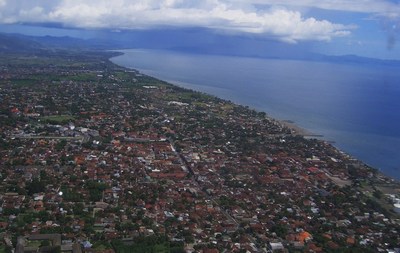
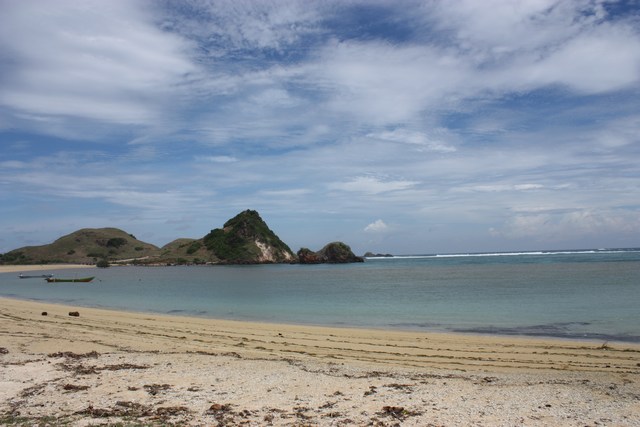
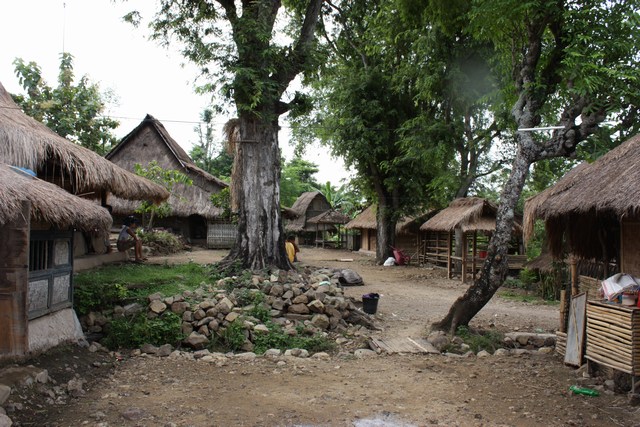
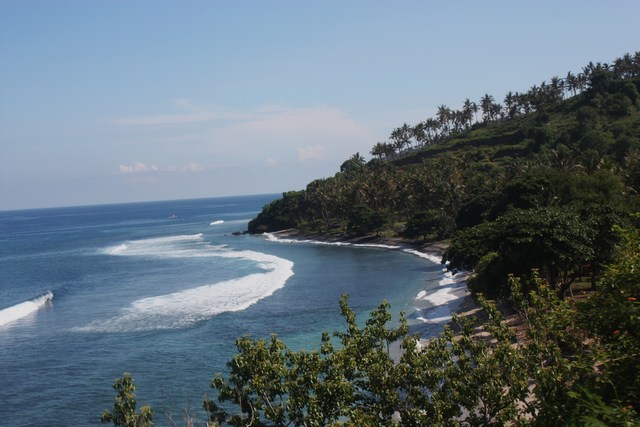
Lombok is the island located directly east of Bali across the 1300m deep Lombok Strait. Anyone who has visited Bali and Lombok will tell you the latter has a fraction of the tourism of Bali. The sister island to Bali has so much on offer to see and do. The environment is pristine with natural, curving bays and high mountains affording spectacular views.
Many people have said to me that Lombok is like Bali was twenty years ago and, they are correct. There are many things I basically liked about Lombok; no traffic jams, the peace and quiet, delicious cuisine and an intriguing culture that I found quite absorbing.
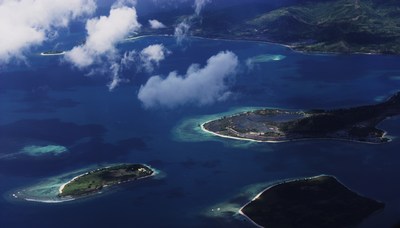
Lombok is easily reached from Bali via boat or air. Being only a half hour flight away, Lombok is a delightful place to visit even if only for a few days. The neighbouring Gilli Islands are reached by boat from Lombok and are a definite must-see for any lover of snorkelling, surfing or just plain chilli’ out on the pure white stretches of sand.
Lombok’s Sasak culture isn’t as colourful and demonstrative as the Balinese culture but short term tourists don’t usually care about culture, other than as a pleasant backdrop. Lombok has the raw materials at hand and room for expansion of its tourist industry. Within the next couple of decades Lombok will look completely different.


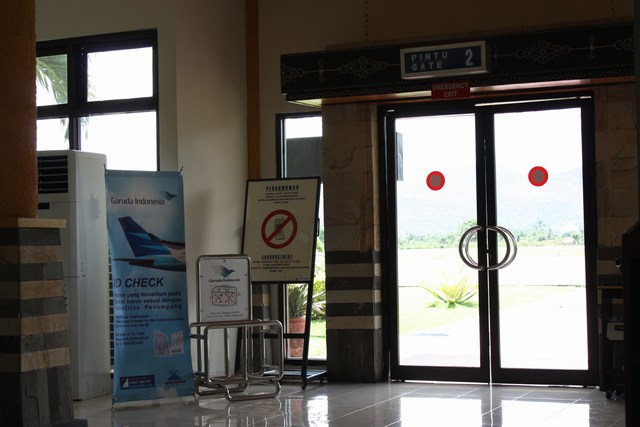
Photo of the Day: Selaparang Airport, Lombok

by Barrie | October 20th, 2010  
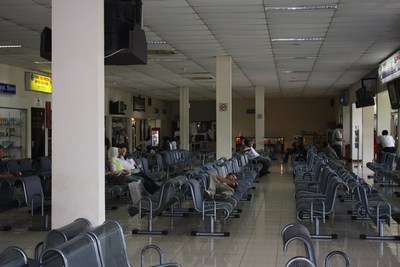
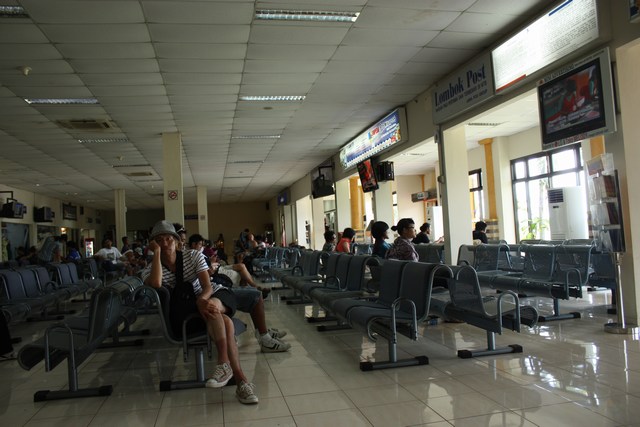
I have been travelling around the archipelago of Indonesia for quite a few decades now and subsequently you get to see [and spend time in] a lot of domestic airports. Some are, oddly enough, elaborate, well appointed with a range of shops and eateries and there are those airports that are not too short of being a tin shed in a paddock. It’s not my style to rubbish airports or their services nor do I ever intend to.
One airport, Selaparang in Lombok, was one of the craziest yet delightful as well as being incredibly small with very little on offer regards shops and eateries. The last time I passed through there not so long ago it was an enjoyable experience, to say the least.
Although small in size it is amazing the amount of people traffic that travels through there and still maintains the ease of accommodating them all while they wait. Selaparang Airport also has one of the nicest views when coming into land or leaving the airport. The new international airport being established in the south of Bali will no doubt be much bigger and elaborate, but hey, give me the little airport lounges any day!


The Nusa Dua Fiesta 2010 Starts Next Week

by Barrie | October 9th, 2010  
The Bali Tourism Development this year again proudly hosts the Nusa Dua Fiesta 2010 with the theme “Green Tourism” and will be held from the 15th to 19th October. The fiesta is a bid to help popularize the Nusa Dua Complex as a world tourism destination. The theme ‘green tourism’ was chosen so that the cultural diversity and the care for the environment will be showcased in this great event.
This year, the Nusa Dua Fiesta 2010 is to be held in Nusa Dua Peninsula and will once again feature exhibitions, performing arts, cultural attractions, sports, music, exhibitions and fun games. Also, there will be a celebration of dance from the various regions in the archipelago.
According to Drs. IGK Purnaya, the General Chairman of the Nusa Dua Fiesta 2010, it will be different this year than in years past. This time, the Nusa Dua Fiesta 2010 will feature the Culinary Exchange 2010 event, which will be followed by chefs within Indonesia. Visitors to the Nusa Dua Fiesta, especially foreign visitors, will be able to see directly the cooking demonstration on traditional Balinese menu, an event that will boost the awareness of the Balinese traditional cooking among international tourists.

The Many Forms of Balinese Dance

by Barrie | October 25th, 2010  
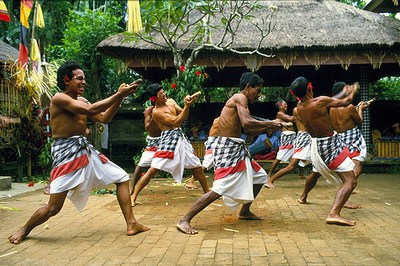
Dance and indeed theatre are an integral part of Balinese culture. Among the most popular dance traditions seen in Bali by tourists are the Barong, Legong and Kecak. Balinese dances are a very ancient tradition that is a part of the religious expression among the Balinese people. Balinese dance forms are famous the world over and it is a part of their culture the Balinese take seriously.
Birthdays, weddings, and temples festivals are all occasions for dramatic performances and dance. Bali dancers learn the craft as children from their mothers as young as the age of ten. In Balinese dance the movement is closely associated with the rhythms produced by the gamelan, a musical ensemble specific to Java and Bali. Multiple levels of articulations in the face, eyes, hands, arms, hips, and feet are coordinated to reflect layers of percussive sounds.
Naturally, the performances for tourists that are on offer for tourists are of a commercial basis compared to those performed with a religious significance like in a Balinese temple. However, the dances are a stunning feature for all visitors to Bali to not miss on their visit to the island.
Kecak: This is the best known of the traditional Balinese dances and does not feature the gamelan. A male choir provides the accompaniment. The dance itself is expresses mythological aspects local traditions and the Hindu Ramayana poem. The dance tells the story of how King Rama was persecuted by the ogre king, Rahwana, forms an alliance with the monkey people of the forest to overcome his enemy. Dances last an hour and feature about a hundred dancers.
Barong & Rangda: The Barong dance is the Balinese version of a Chinese lion dance and is very popular with tourists. It is a battle of good versus evil and the lion character (Barong) represents good and is up against the widow witch (Rangda). There are two guys who work the lion character and get very animated.
The Barong dances in tightly wound around Balinese superstition and culture and is performed during religious ceremonies as well as for tourists. Central to its theme is the fight between the king of the forest and the forces of evil. The musical accompaniment is a gamelan orchestra with metal xylophones creating a rhythmic effect.
Kris Dance: This dance comes at the end of the Barong dance and is almost like another dance entirely. Basically the followers of Barong have been overtaken by evil spirits and have entered a trance state. The evil Rangda taunts them and they attempt to stab themselves with their krises (traditional wavy knives) until the good Barong steps in to stop them. The magical trance state is supposed to protect them from injury.
Legong: The most viewed by tourists as a number of 5 star hotels actually have performances in the grounds of the hotel. The Legong dance is very graceful and the dancers are usually young girls, often not even in their teens.
Topeng: This dance has sacred significance to Balinese and only those who behave respectfully will be allowed to watch. This dance is accompanied by a gamelan orchestra and involves dancers wearing masks, imitating the character represented by the mask. These dances are often performed at ceremonies and processions. The particular rhythms followed by the different dancers are related to the age of their characters.
Sanghyang (Fire Dance): The Fire dance has a variety of forms but the basic idea is that it is done to drive out the evil spirits from the village. The dancers are in a trance state and a priest brings them out of it at the end. One version of this is the Sanghyang Jaran where a boy dances through and around a fire riding a sacred toy horse. Another is the Sanghyang Dedari where a couple of young girls dance gracefully, eyes closed.
There are other dance forms worthy of note and just as interesting to see on your visit to Bali. They are the Baris, Kebyar, Barong Landung, Janger, Jauk and the Pendet which is a daily dance performed at temples before offerings are made.
One theatrical performance definitely worth seeing is the Ramayana Ballet. This dance follows a similar story to the Kecak dance and tells of Rama and Sita with a gamelan orchestra.
Photo Courtesy: blog.baliwww.com

Danger in the Archipelago – Travellers be Aware

by Barrie | October 26th, 2010  

I wasn’t surprised to read that the alert status for Gunung Merapi in Yogyakarta, Central Java has been raised to red alert. Being a place I lived for ten years there is always constant activity on the mountain 45 kilometres from this popular tourist destination. I was there for the last massive eruption and the last devastating earthquake to hit the city referred to as the cultural heart of Indonesia.
Gunung Merapi has four stages of status level; in normal level, cautious, alert and red alert. Now that it is at red-alert any travel to the beautiful and inviting city of Yogyakarta should really be avoided until the status level drops.
The tectonic plates in Indonesia are in overdrive with a The 7.7-magnitude undersea quake hit south of the Mentawai Islands, off the west coast of Indonesia, at 9.42pm yesterday. This was followed by another two quakes of the sizes, 6.1 and 6.2 several hours later.
Instantaneously a Tsunami warning was issued and although damage is sketchy at the moment there are up to 10 Australians missing after their boat was hit by large waves. Again, travel to this area should be avoided until the situation is clarified.