Sabtu, 01 Januari 2011

New Years Eve in Bali

by Barrie | December 30th, 2010  

I don’t know about you but I reckon this year has flown by as has the decade. Anyway, it’s big-time party time again and the tourist strip will be absolute mayhem with New Year’s Eve reveller’s bringing in the coming year in Bali. Bars, nightclubs and the ilk, in fact wherever alcohol is served, will be overflowing with party people.

Be aware of course that unruly behaviour can be seen by the numerous new CCTV surveillance cameras recently installed. The police will be everywhere and although their demeanour will be tolerant, don’t push your luck.
In the light of the recent drug arrests, be careful because there will undercover cops everywhere. Most importantly, females should avoid walking alone. There are those elements on the island who unfortunately take advantage of a single female and especially if the lady has had a few drinks.

Good news is, for those worried about security, the Bali police have deployed 9,000 personnel over the New Year’s period to ensure the peace and safeguard public order. They will be covering areas where the public gather and other locations as well as special attention are places of worship.

So, go out and ENJOY! Happy New Years Eve to one and all

Rabu, 29 Desember 2010

Photo of the Day: Gunung Kawi

by Barrie | December 26th, 2010  
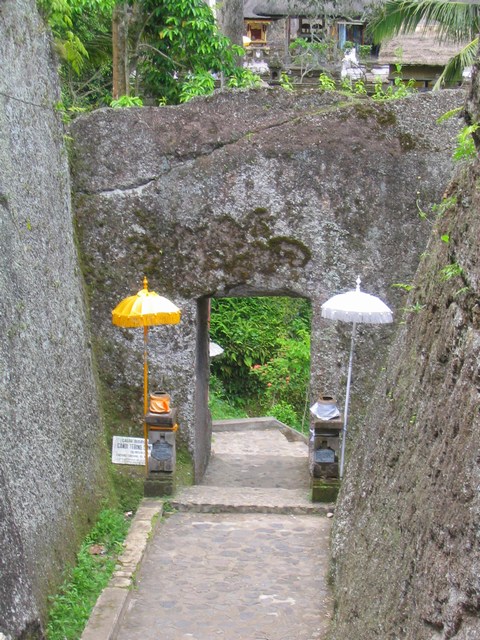
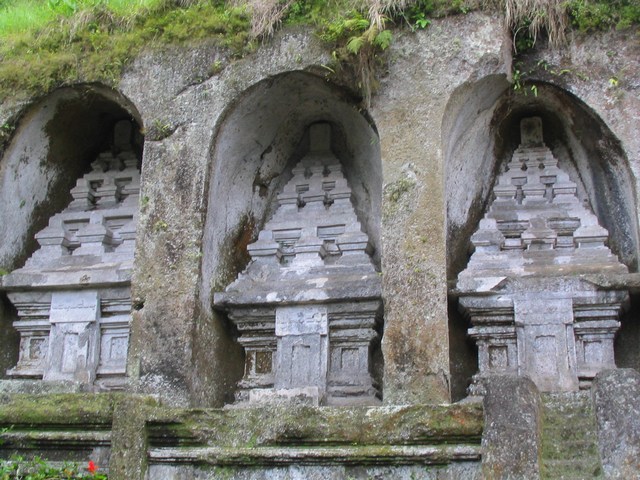
A breathtaking and awe-inspiring site located two kilometres south of Tampaksaring, Gunung Kawi is two rows of ancient royal tombs on the banks of the Pakerisan River deep in a ravine overlooked by terraced rice-fields. A long, steep stone stairway leads down to this ancient site.
The holy Pakersian River flows through the centre of Gunung Kawi cutting the site into two separate sections with a bridge to connect one side to the other. It is believed the holy waters of the Pakerisan sanctify Gunung Kawi, and the eerie beauty of the place is evokes a peaceful atmosphere. There is parity with the tomb of Artaxerxes II at Persipolis and the Ellora Caves in India with Gunung Kawi.


Jumat, 24 Desember 2010

Seven Stunning Places in Bali

by Barrie | December 22nd, 2010  
There are so many places and objects to see in Bali that it would take quite a few years to see them all and, pretty much over the decades I have seen and explored Bali to the max. On my travels there are those places that I have re-visited and been disappointed mainly because of the ‘overkill’, due to the mass tourism that exists now on the island, where tourists and travellers alike are being charged ridiculous prices for entry fees and then getting hassled non-stop by persistent hawkers.
Then there are those beautiful, quiet places that were gems to find and these were generally off the so-called tourist track and now, as I am led to believe, are also being included on tour itineraries. So, I decided to put together a few gems that maybe some of you have already seen, but if you haven’t, then it will give you something to look forward to on your next sojourn.
Vihara Amurya Bhumi: On the outskirts of Blahbatuh in Central Bali there is a beautiful, secluded Chinese temple. I can guarantee that you have crossed the steel-girder bridge as you enter town plenty of times, but, if you had have stopped on the left-hand side after you crossed the bridge then you would have noticed a stone stairway leading down to the river below. Here you will find Vihara Amurya Bhumi. This is a stunning and large temple literally sitting at the base of a cliff and on the cliff walls, unique carved Bhuddas. Entrance is free but a donation would be appropriate.

Danau Tamblingan and Danau Buyan: A half hour drive north of Pura Ulu Danau Bratan on the road to Singaraja, there is a sharp turn-off to the left. You can’t miss it because there are heaps of monkeys on the road where people stop to feed them. Take the turning to the left and follow the road for about five miles and you will see on your left-hand side the twin lakes of Danau Tamblingan and Danau Buyan. There are plenty of places to stop and take photos here and the scenery is spellbinding.

Sanur Mangroves: Most of you will have driven along the Jalan Ngurah Rai bypass on your way to Sanur and you would have passed all the mangroves on your right-hand side. These mangroves are vital to the ecosystem of the area and you can actually walk along wooden walkways through the entire mangrove swamps to the ocean. There are two walkways and so, enter in one and walk back out the other. The people at the research centre located at the entrance are a boon of information.

Pura Luhur Batukau: What I would consider to be one of the most peaceful and beautiful temples on the island, Pura Luhur Batukau is located at the base of Gunung Batukau. It is the quietness of the area that I find appealing and the cool air is refreshing. Walking around this temple at the base of the mountain is surreal as is the reflective gardens.

Brama Vihara Arama: Without a doubt the most stunning Chinese place of worship on the island of Bali is the monastery of Brama Vihara Arama. Located not far from Singaraja just east past Banjar you will find the Buddhist monastery. The Brahma Arama Vihara is a spectacular place and is the most important Buddhist monastery in Bali. Complete with golden Buddha statues and a pristine natural setting, the most stunning part of this monastery is the miniature replica of Borobudur on the top level.

Amed & Surrounds: The east coast of Bali is in my opinion the most panoramic part of the island. Amed and surrounding areas are great places to stay and wile the days away far from the madding crowds of the Kuta tourist strip. Losmens and good hotels are clean and affordable, the diving and snorkelling is excellent and the locals, probably the friendliest that I have encountered.

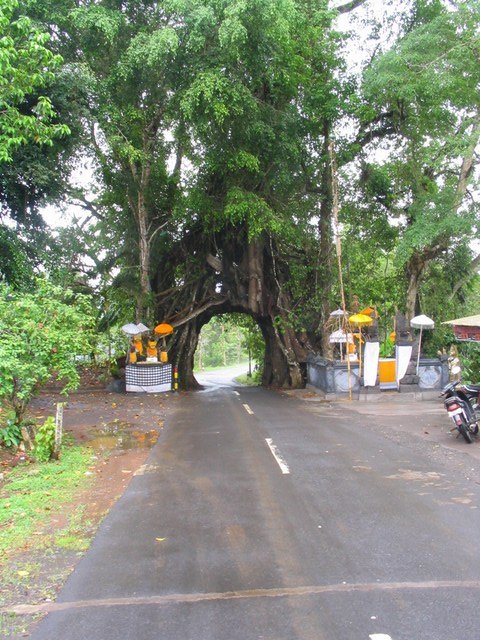
Bunut Bolong: In the central-west of Bali you will find one of the most surprising and eloquent surprises, Bunut Bolong. The road actually goes through a tree. Of course there is a hole carved in it and it is a sacred place to the Balinese. Head west to Negara on the coast road and turn off at the town of Pekutatan. The long winding road up into the cool hills will see you passing by coffee and clove plantations and just as you turn the next bend, voila, there it is.

Selasa, 21 Desember 2010

Purchasing Textiles in Bali

by Barrie | December 20th, 2010  
Everyone who visits Bali inevitably leaves with one kind of souvenir; it could be a T-shirt or some strange looking phallic symbol. However, for that special souvenir, and one that is everlasting, look at the options of purchasing a piece of textile. I don’t mean your wrap-around sarong but a hand-woven or loom created piece.
Don’t restrict your choice of textile to just Bali. Seek out those pieces made in Java, Lombok or Sumbawa. In fact, on the island you will be able to find quite a few of these pieces. Indonesians are renowned the world over for their textiles. Balinese traditional textiles are much more than simply decorative pieces of cloth. In Bali, the Balinese produce textiles for a variety of markets and, one of them the tourist trade.
Various forms of cloth are produced on the island of Bali and each one beautiful in its own right. Batik is a textile is manufactured mainly in factories these days but there are some smaller places in the outer lying villages where the batik process is still as it has been for centuries.
The two main styles of Batik are batik tulis and batik cap. The art of Balinese textile decoration is best expressed in skirt, chest and head cloths. There are three main categories of Balinese textile and these are Prada, Songket and Ikat.
The main batik manufacturing town on Bali is at Gianyar where many factories can be found and visited. Be warned though, the price you pay at the factory is inflated and you would be better of checking the street prices in markets such as Sukawati first. Be warned though that purchasing traditional cloth in the markets along the tourist strip will not give you the quality you will find in the places of origin. There are other traditional weavers in other places across Bali that weave stunning pieces of cloth and it is to these places you should visit.
Grinsing is one of the rarest weaving techniques practiced and you will find this textile in the traditional village of Tenganan, East Bali. Gringsing is also known as the ‘flame cloth’ and in this elaborate dyeing process both the warp and weft threads are carefully bound before dyeing. This creates numerous patterns that once finished seemingly fit together perfectly and harmoniously.
Tenganan is the only place in the world where the double-ikat process is practised. There are not many women left in Tenganan who know this practice of weaving but it is being handed down to the next generation. To weave a piece of gringsing could take up to three days but the finished product is superb. When you visit the village you are welcome to have a look at this weaving process and of course for a fee!.
Endek is a tie-dyed woven textile popular with most Balinese. Wooden hand-operated looms are used in the process of the weft-ikat method. This is where sections of the cloth are tied and then wrapped before immersing them into tubs of dye. The basic designs are irregular and soft wavy patterns. Also created are diamond designs and a zigzagging pattern. Endek is a versatile cloth for the Balinese because it can be worn for both daily use and ceremonial purposes.
Songket is a brocaded silk that has interweaving patterns of silver and gold thread and is classified as the ceremonial dress of all Balinese. Worn mainly on religious occasions, it is also worn to weddings, tooth filings and other important ritual events. The cloth is tapestry in appearance and has various motifs including wayang figures, birds, butterflies, flowers and leaves. The process of weaving is done on back-strap looms. Because of its thread and quality it is generally accepted that it is a wealthy man’s cloth.
Interestingly, the kain songket is bought in two pieces and then sewn together. The men wear the songket saput. This is a narrow piece of cloth worn over a sarung. Together with a songket udeng or head band this is for more formal and ceremonial occasions.
Decorated with silver or gold thread, kain prada is a lustrous fabric woven of cotton or silk. A ceremonial cloth, it is generally two meters in length and can take up as long as three months to weave from start to finish. Various patterns include lotus blossoms with swastikas as border decorations. These are however the most common motifs.

Bali Travel Warning for Dengue Fever

by Barrie | December 18th, 2010  
The climate in Bali is one that is a natural breeding ground for germs. Add to that some of the local methods of washing and cooking and so its no wonder tourists get ill occasionally, and now, the Health Department in Australia has put out an alert regarding Dengue Fever and the growing number of people suffering the malady is increasing. In fact, there had been over 430 reports of dengue fever in West Australians this year and that is a threefold increase on last year.
Dengue Fever is transmitted by a virus carried by mosquitoes. Today I read about this potentially deadly disease and the symptoms can develop within three to 14 days of being bitten and include fever, vomiting, severe headaches, aching joints and muscles, rashes and pain behind the eyes.
There is no medication to stop or treat dengue fever. This mosquito tends to attack during the day and is slightly larger than the malaria carrying variety. In an article I read the Health Department suggested people take the following precautions to avoid being bitten by dengue fever infected mosquitoes:
Ensure accommodation is mosquito-proof. Use mosquito nets, insect sprays, mosquito coils or plug-in
insecticide mats in rooms
Wear long, loose-fitting, light-coloured protective clothing
Use tropical strength personal insect repellents
Ensure infants and children are adequately protected, including using infant-strength repellents
Most 5 star hotels smoke out their gardens every couple of days to keep mosquitoes away. One good piece of advice is to ensure you have travel insurance so if you do contract this disease, you ill be covered for treatment at one of the excellent facilities in Bali.

Hotel Boom in Denpasar

by Barrie | December 15th, 2010  
It appears there is a sudden rise in hotels in Bali’s capital of Denpasar. Although for most tourists the idea of being dragged away from the vicinity of the beach and shops during their stay in Bali, they really are missing out. Of course there are those people who take the ‘cultural tour’ of Denpasar and get back to Kuta ASAP. But, this is great news for tourism in Bali.
The capital of Bali can now, hopefully, attract more tourists than it usually does. Denpasar is a bustling and energetic city that possesses a lot of attractions for tourists and travellers. A great majority of tourists dislike the city preferring the madness and mayhem of Kuta but I reckon it is a fabulous city to explore and has some excellent eateries.
In an article I read the new phenomenon of “city hotels” cropping up across the island’s capital of Denpasar is amazing. According to the article: By their estimation, there are now around 8,000 hotel rooms in Denpasar, prompting the Denpasar, Bali chapter of the Indonesian Hotel and Restaurant Association (PHRI) to undertake synergistic promotion programs with the municipal government.

Places to Visit in Bali: Tenganan

by Barrie | December 16th, 2010  
Tenganan is the most famous Bali Aga (original Balinese) village and is located close to Candi Dasa in East Bali. Villagers maintain a strict cosmology and social organization. Villagers must live inside the village and marry from within. There are parts of Tenganan, outside of the village proper, where villagers who have married outside of the village can live and complete outsiders have yet another part.
Tenganan produces fine basketware and a double weave ikat, called geringsing, the only such place to be found in South-east Asia and one of only 3 in the world. Visitors to Tenganan can wander around the long rectangular village, which is laid out in tiers, wide stone steps in between. Tenganan is closed to outsiders after dark. The pura puseh (temple of origin), which is in honour of the village founders, lies outside the village walls to the north. At the other end of the village, just inside the entrance is the bale agung, the long rectangular bale where the village council meets.
Legend has it that in the 14th Century, King Bedauli, the ruler of Bali, lost his favourite horse and offered a reward to anyone who could find it. The horse was eventually found dead near Tenganan and local people asked to be given the land as a reward. The king sent his representative to decide the boundary of the land to be given, and told him to include all the land where he could smell the dead horse. The local village chief accompanied him couldn’t figure out how he could smell the horse wherever he went, eventually drawing wide boundaries. Apparently the village chief had a chunk of horse meat inside his clothes. The descendents of the chief now work as money changers in Kuta.
The thing Tenganan does have is unique cultural history and a special weaving tradition. There are only 600 families in Tenganan, and locals are forbidden to marry outside of the village. If they do, they are banished from the village forever. A Tenganan local once told me that there are really 3 parts to the village, the western part, which is the proper part, the north eastern part which is where exiled locals go, and the south eastern part, where outsiders, Javanese and other Balinese live.
Tenganan is one of only 3 places in the world, the others being India and Japan, where a double ikat is woven. In a double ikat (cloth), the weft (longitudinal) and weave (lateral) threads are tied separately before being dyed, creating an intricate pattern. A single ikat takes 5 years to make and is used in religious ceremonies.
There is a 3 day festival held once a year in the village called UDABA SAMBAH and held mid-year usually in the months of Juni/Juli. When you visit Tenganan try and get there early in the morning to avoid the tourist buses as it does get quite like a circus. Best times are before 10am and after 4pm. The village is closed to outsiders and visitors after dark. Be aware also that you will have to pay a small parking fee outside.